


Community Science in 2024
Community science at Tremont is a collaborative effort between volunteers, researchers, staff, students, and teachers. Our community science program is only possible because of the passion and efforts of these wonderful folks. Each year, our team of community scientists participates in research projects focused on amphibians, birds, trees, butterflies, soil, and more! Not only do these projects provide valuable data, but they also allow us to deepen our connection to the natural world. By growing our appreciation for and understanding of the natural world, we ultimately hope to better conserve it.
Jump to: Phenology – Bird Banding – Butterfly Education – Stream Salamanders – Vernal Pond-Breeding Amphibians – Weather Monitoring – Biodiversity on Tremont’s Second Campus – Get Involved


Phenology
Phenology is the study of the timing of natural events in the annual life cycles of living things. This includes events such as bird migration and wildflower blooming. The timing of these events can be influenced by environmental factors such as temperature, light, and rainfall, so phenology is an important way to observe the potential effects of climate change.
At Tremont, we collect phenology data in several ways, including a wonderful group of volunteers who monitor eight designated phenology plots throughout the year to track the annual life cycles of trees, wildflowers, and migratory songbirds. Across those eight plots, volunteers collected phenology data on several hundred trees!
Another phenology project at Tremont is conducted through seasonal observations by both staff and volunteers. Some of these seasonal observations have been recorded at Tremont for more than 30 years! Not only does this make for a friendly competition, but it also encourages more observations of the natural world. These observations allow us to look for long-term trends that can be shared with everyone who visits Tremont. Last year we updated the phenology visualizations on the community science board in the dining hall with data from the past five years including the one featured here.

American Hornbeam (Carpinus caroliniana) fruits resemble dried seeds when ripe. Volunteers develop a keen eye for the flowers, leaves, and fruits of each different species they monitor.
Pawpaw trees produce the largest fruit of any native, edible plant in North America, with individual fruits weighing up to one pound. These trees appear to be blooming in Walker Valley about a month earlier than when we first started collecting Pawpaw data in the 1990’s.
A huge shout-out to Mac Post for all his efforts coordinating this project! Additionally, we are grateful for the dedicated observations by Kimber Bradbury, Cheryl Brodbeck, Gail Broxson, Karen, Daniel, and Hannah Metcalf, Sarah Geagley, Mark Weingartz, Tammy Pilkington, Travis Whitehead, Terry Uselton, and Allison and Rodney Pearson. Your commitment to your trees is inspiring! Also, thank you to everyone that recorded an observation on our signs of the seasons sheets!
Phenology
Phenology is the study of the timing of natural events in the annual life cycles of living things. This includes events such as bird migration and wildflower blooming. The timing of these events can be influenced by environmental factors such as temperature, light, and rainfall, so phenology is an important way to observe the potential effects of climate change.
At Tremont, we collect phenology data in several ways, including a wonderful group of volunteers who monitor eight designated phenology plots throughout the year to track the annual life cycles of trees, wildflowers, and migratory songbirds. Across those eight plots, volunteers collected phenology data on several hundred trees!
Another phenology project at Tremont is conducted through seasonal observations by both staff and volunteers. Some of these seasonal observations have been recorded at Tremont for more than 30 years! Not only does this make for a friendly competition, but it also encourages more observations of the natural world. These observations allow us to look for long-term trends that can be shared with everyone who visits Tremont. Last year we updated the phenology visualizations on the community science board in the dining hall with data from the past five years including the one featured here.
American Hornbeam (Carpinus caroliniana) fruits resemble dried seeds when ripe. Volunteers develop a keen eye for the flowers, leaves, and fruits of each different species they monitor.
Pawpaw trees produce the largest fruit of any native, edible plant in North America, with individual fruits weighing up to one pound. These trees appear to be blooming in Walker Valley about a month earlier than when we first started collecting Pawpaw data in the 1990’s.
A huge shout-out to Mac Post for all his efforts coordinating this project! Additionally, we are grateful for the dedicated observations by Kimber Bradbury, Cheryl Brodbeck, Gail Broxson, Karen, Daniel, and Hannah Metcalf, Sarah Geagley, Mark Weingartz, Tammy Pilkington, Travis Whitehead, Terry Uselton, and Allison and Rodney Pearson. Your commitment to your trees is inspiring! Also, thank you to everyone that recorded an observation on our signs of the seasons sheets!

Bird Banding
 The Monitoring Avian Productivity and Survivorship (MAPS) station at Tremont has been operating since 2000. MAPS stations focus on collecting data that can estimate the productivity, recruitment, and survival of individual bird species. To collect this data, we open an array of fine mesh nets at standardized times during the summer breeding season and monitor them for six hours. Nets are checked at regular intervals and experienced bird “pluckers” safely remove any birds that fly into the nets. Birds are then brought to the master bander who carefully puts a small, aluminum band on the bird before releasing them unharmed. These bands have unique numbers so the birds can be identified if they are recaptured at any banding station. Additional data, including age, sex, and reproductive status, are also collected.
This summer, we captured 78 total birds, including 20 recaptures! We banded 18 different species during the 2024 season including our first ever Kentucky Warbler and Blue Jay!
Ultimately, this information can help us better understand what may be causing population declines in these species and also how we can effectively target conservation efforts. If you are interested in learning more about MAPS, visit birdpop.org.

We cannot say thank you enough to Paul Super, the Metcalf family, the Geagley family, Clare Dattilo, Stephanie Mueller, Mark Armstrong, Gar Secrist, Kat Livar, Nick Smith, Daniel Webb, Hannah Smith, Hannah Hembree, Anna LaFollette, and Grace Bobo for their willingness to wake up early, thoughtfulness in safely handling birds, and excitement for engaging Tremont participants.
Butterfly Education Program
Last fall our butterfly education team led more than 300 participants in exploring, appreciating, and collecting data on the butterflies of Cades Cove. Volunteers identified 30 different butterfly species during the 2024 season. These data allow us to better understand the abundance of these species both within and across fall seasons.
Additionally, we tagged a total of 154 Monarchs. This represents a lower number of tagged Monarchs than in recent years and may reflect the prior winter’s Monarch counts in Mexico, which were the second lowest on record. Notably, last December the U.S. Fish and Wildlife Service (USFWS) proposed protection for the Monarch butterfly under the Endangered Species Act. This was a major step as the species has been a candidate for listing since 2020. It is unclear how/if this would affect our butterfly education program. However, we are hopeful that this proposed protection will help ensure the conservation of this ecologically and culturally important species.


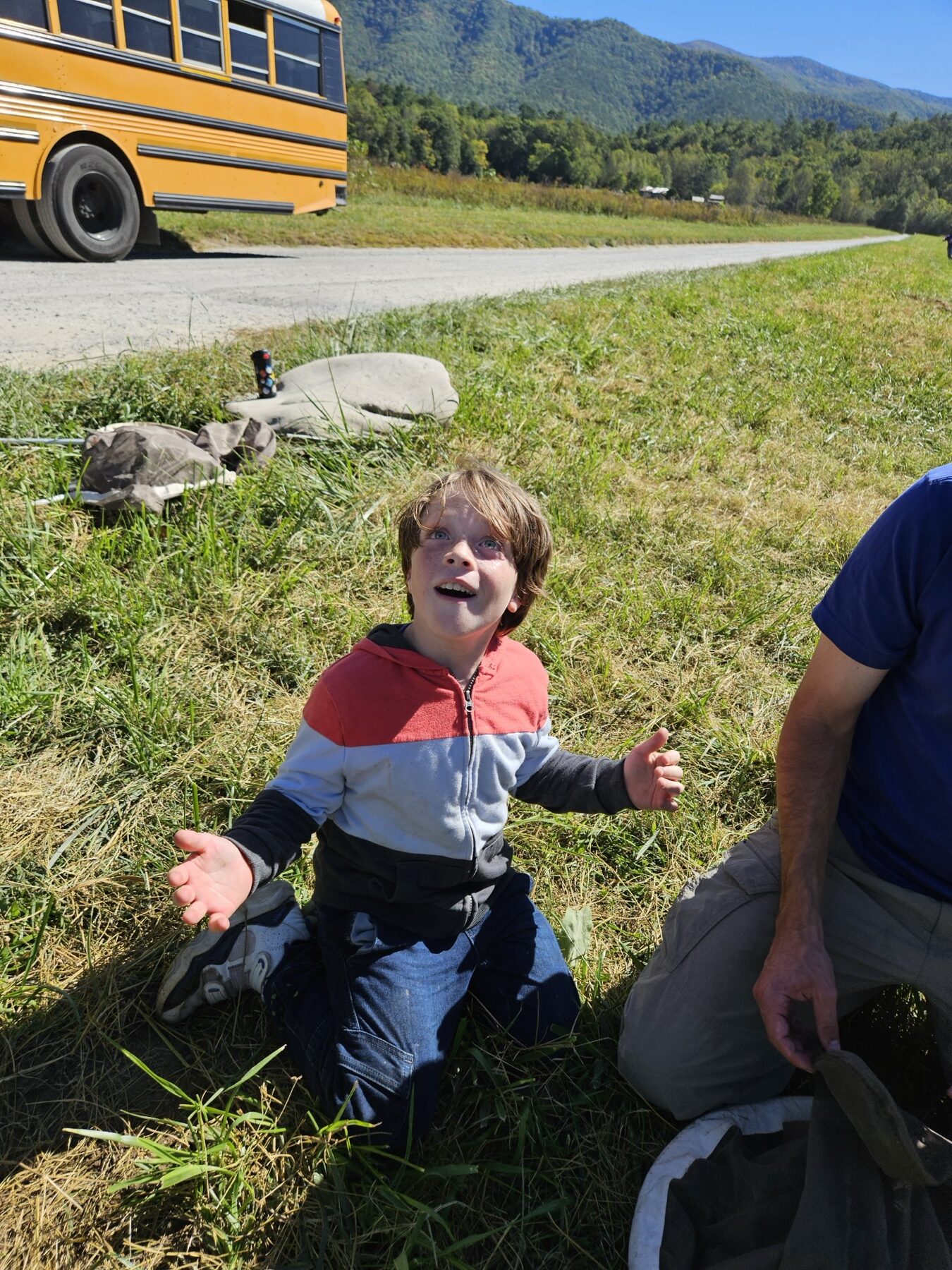


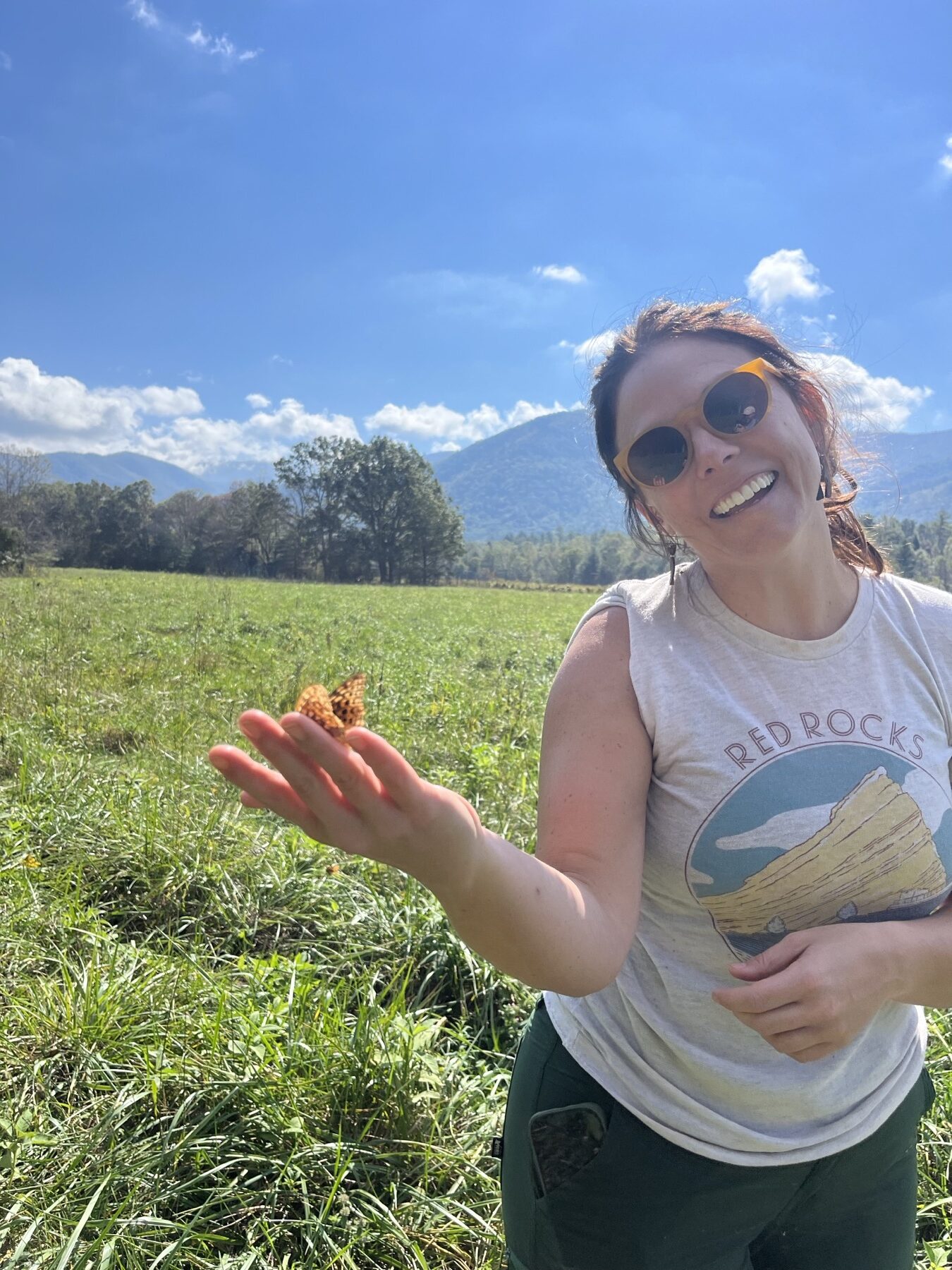

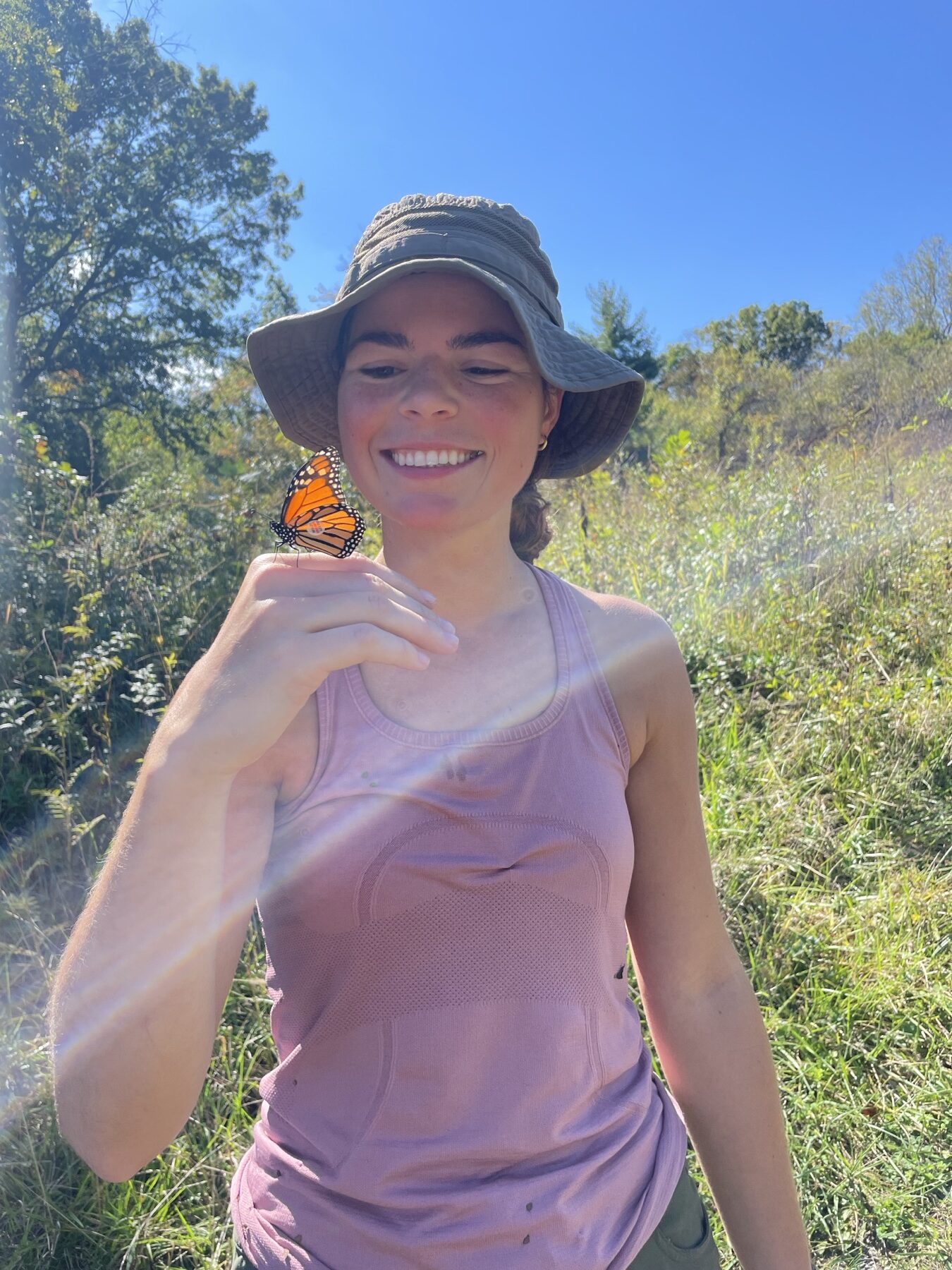
We truly appreciate Wanda DeWaard for her expertise and guidance on all things butterflies! Additionally, many thanks to Mac Post, the Davis and Powell family, the Neilson family, the Hall family, Mark Weingartz, Milly Rosenberg, the Metcalf family, the Geagley family, Gar Secrist, Terry Uselton, the Dattilo family, Mary Long, Walt Peterson, Laura Mallette, and Juli Rigell. Their enthusiasm for butterflies and willingness to share their passion with others is an incredible resource for Tremont and all of our butterfly participants.
Stream Salamanders
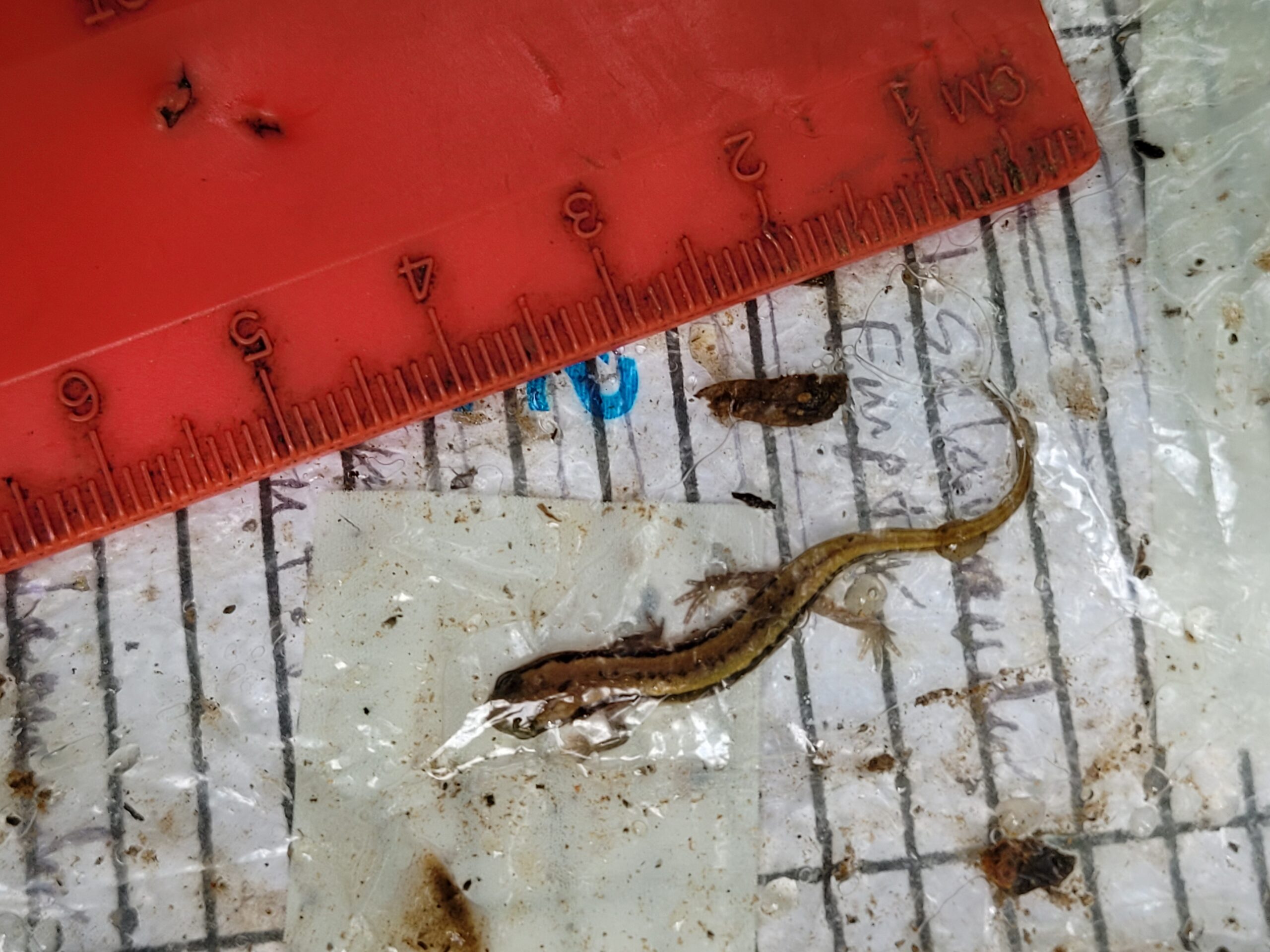
Blue Ridge Two-Lined Salamander

Cherokee Black-bellied Salamander
Tremont volunteers visited six different stream plots to collect salamander data a total of 28 times this year. These dedicated volunteers collected data on seven species including Cherokee Black-bellied Salamanders and Blue Ridge Two-lined Salamanders. Salamander monitoring at Tremont started in the late 90s and provides valuable data on species diversity and abundance. Salamanders are indicator species so any changes in their diversity or abundance could represent a change in ecosystem health.
During their surveys, our salamander volunteers took on the challenge of traversing uneven terrain, safely handling sensitive species, and accurately identifying salamanders with a dichotomous key:

Click to enlarge.
Once they are able to identify their salamanders, they record their findings using a datasheet like this:

A major thank you to Tom Dittmaier, Rory and Meghan Ferguson, Mark Weingartz, Alcus and Gail Broxson, David and Julia Wietlisbach, Gar Secrist, Dana and Eliza Saywell, Jeff Gordon, and Donna Ballew for diligently monitoring the streams for our salamander friends!
Vernal Pond-Breeding Amphibians
Our winter pond-breeding amphibian project is focused on monitoring wetlands for the presence and development of both spotted salamander and wood frog egg masses. For this monitoring, volunteers survey wetlands at three different sites in the park. In 2024, volunteers counted a total of 815 spotted salamander egg masses and 7034 wood frog egg masses between late January and early March. In addition to counting egg masses, volunteers measured abiotic factors such as depth and pH. Long-term monitoring projects are crucial as these species face threats from ranavirus, chytrid fungus, climate change, and feral hogs.
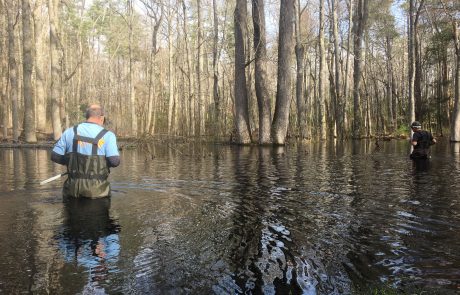
We would like to express our gratitude to Walt Peterson, Mac Post, Laura Dixson, Mark Weingartz, Tracy Tolley Hunter, Madeline Walker, Lark Heston, Carrie Schmitt, and David Bryant for all their efforts while braving chilly conditions!
Weather Monitoring
Most mornings at Tremont you can find staff and students collecting data at our weather station, contributing to a project started in 1991. We hand-collected weather data on 254 days this year, a new record for us! That information, combined with weather data automatically collected each day by a HOBO data logger, allows us to look at long-term trends:

Average minimum temperatures in January in Walker Valley by decade. Do you notice any potential trends? Climate research by NOAA has shown global annual temperature has increased at an average rate of .36°F per decade since 1982.
 Additionally, last year, we registered Tremont’s weather station with the Community Collaborative Rain, Hail, and Snow Network (CoCoRaHS). CoCoRaHS is a nationwide community science effort to provide high-quality precipitation data to observers and decision-makers on a timely basis. CoCoRaHS is free to join and an awesome way to monitor localized precipitation!
Thank you to all the Tremont staff and program participants who collected weather data this year!
Biodiversity on Tremont’s Second Campus
Total Species Diversity Observed on Tremont's Second Campus
The overall goal of this research project was to create a baseline snapshot of the species found on Tremont’s second campus through iNaturalist observations. iNaturalist requires digital photographs of a species or evidence they have physically been at the location (tracks, scat, bird sound recordings, etc.). The iNaturalist app is free to download and an awesome way to contribute to community science in the park or your own backyard!
These data were collected during 33 surveys by Randy Puckett from June 24 to November 27, 2024, and resulted in 5677 total observations of 409 different species!

Data from iNaturalist highlighting the most frequent species observations by Randy from the second campus.
Specifically, this project focused on the managed meadows of the property with a particular interest in recording the species of native pollinators present as well as the flowers they were observed on. The most commonly observed pollinator was the native Common Eastern Bumble Bee (Bombus impatiens) with 423 iNaturalist research-grade observations from July 3 to October 22, 2024.

Many of these Common Eastern Bumble Bees appeared to prefer to feed and pollinate Red Clovers with 151 observations on this non-native legume species. The most common native flowering plants they were observed on were Goldenrods (70 observations), White-flowered Frostweed (54 observations), and Yellow Wingstem (44 observations).
Keep an eye on our iNaturalist project for more from our second campus biodiversity project!
Many thanks to Randy Puckett for his endless passion for field ecology and for sharing his love of science with others!
Get Involved
All of these programs run because of engaged and curious community members who volunteer their time and knowledge to help us all learn more about our world and our place within it. If you are interested in volunteering to support Tremont’s community science projects, please fill out the volunteer application. Note that most community science projects require a training session and long-term commitments, though many only require a few hours each month, seasonally. Not all projects are suitable for young children.
Call for science communicators! We are currently looking for data-savvy volunteers who like to analyze numbers and communicate the results for public understanding. If this is you, email us at science@gsmit.org.